
Model
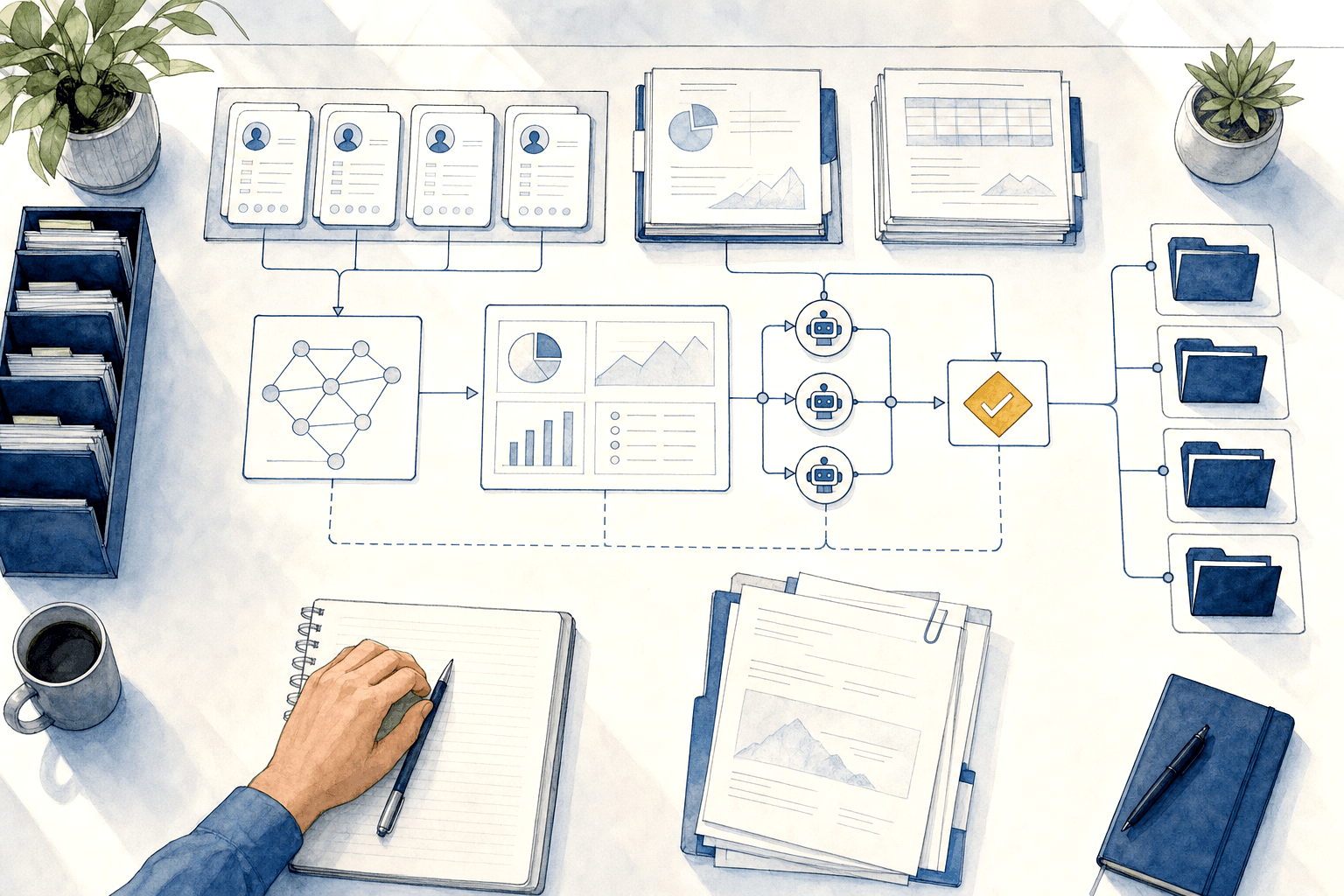
Financial files can flow into a clearer view
Statements, add-backs, KPIs, and assumptions can be organized around the investment team's review logic.
Financial analysis automations
Financial model support, KPI extraction, quality-of-earnings prep, valuation sensitivity views, and automated analysis workflows built around the investor's criteria.
Best first when financial statements, spreadsheets, and early diligence files need to become decision-ready analysis faster.

Fit check
The goal is not to replace investment judgment. The goal is to get cleaner first-pass analysis, faster variance checks, and a more consistent view of whether the deal fits.
Model
Statements, add-backs, KPIs, and assumptions can be organized around the investment team's review logic.
Signal
Margin trends, revenue quality, cash flow, concentration, and valuation sensitivities can surface earlier.
Workflow
The team spends less time rebuilding the same analysis shell and more time deciding what the numbers mean.
Analysis fit
Financial analysis automation is useful when the team has statements, models, add-backs, KPIs, or early diligence files but needs a repeatable way to surface the actual decision signal.
Search intent
Statements, adjustments, add-backs, and assumptions are organized into a review shell before the team debates what the numbers mean.
Search intent
Revenue quality, concentration, cash flow, margin movement, and operating metrics can be extracted into views the team can compare.
Search intent
Scenario and multiple-range views help the team understand how sector, size, growth, and risk assumptions affect the investment case.
Search intent
Outputs are shaped around decision notes, diligence questions, and investment memo support instead of a spreadsheet that only one analyst understands.
Deliverables
Financial analysis automations that help the team move from files to investment signal.
Model
A structured model environment for statements, KPIs, assumptions, adjustments, and valuation notes.

KPI
Reusable views for margin, revenue, cash flow, concentration, growth, and operating metrics.

Sensitivity
Scenario and multiple-range support that helps the team see how assumptions change the investment case.

Reporting
Summary outputs and review notes that help the investor explain what the numbers support.
Example engagement
Analysis example
An investor receives seller statements, KPI exports, and an early model. SilverShore builds a structured intake shell, extracts the key trend views, adds valuation sensitivity ranges, and packages the findings into decision notes. The team still owns investment judgment, but the repeat analysis work becomes faster and easier to review.
Questions this service answers
These are the practical questions this service is built to resolve before a mandate expands.
Question
It can structure financial intake, extract KPIs, compare trends, build sensitivity views, and prepare decision notes without replacing investor judgment.
Question
No. It supports earlier screening, model organization, diligence prep, and internal analysis before or alongside specialist review.
Question
Useful starting files include financial statements, revenue detail, customer concentration, KPI exports, existing models, add-back notes, and prior diligence questions.
Question
The analysis can connect operating metrics, margin trends, concentration, growth, and multiple ranges so valuation assumptions are easier to pressure-test.
Process
The work stays scoped, visible, and tied to an investor operating asset.
Process
Define the thesis, target profile, fit boundaries, and proof needed before outreach or build work starts.
Process
Create the research, materials, automation, or execution layer that supports the investor workflow.
Process
Put the asset into use with clear ownership, reporting, and next-step routing.
Process
Use reply quality, meeting quality, diligence questions, and portfolio feedback to tighten the system.
Related service paths
These links connect the investor service page to the commercial paths Google and buyers should understand together.
Diligence speed
Route deal files, criteria checks, and follow-up questions once the financial review shows enough signal to continue.

Sourcing context
Use sourcing support when financial review should connect back to target criteria, owner context, and qualified opportunity flow.
Valuation context
Use thesis mapping when sector, size, valuation range, or target universe logic should be clarified before models become too precise.
Route
If another layer would create more immediate signal, use the investor service index to choose the sourcing, brand, intelligence, automation, or portfolio support lane that fits.
Investor handoff
Every investor lane is built to clarify the mandate, preserve owner trust, and make senior time easier to allocate.
For investorsRelated reading
These pages connect the investor lane to adjacent sourcing, diligence, valuation, and operating questions.
Reference
Use valuation context before a model turns assumptions into false precision.
Insight
Use the EBITDA article to separate sustainable earnings from add-back noise.
Insight
See why comparable transactions, sector, size, and buyer profile matter before anchoring value.
Operating context
Every deliverable should make the next investor decision easier: thesis focus, deal sourcing, diligence path, financial analysis, portfolio support, or internal firm operations.
Investor layer
Market signal, deal sourcing, diligence context, financial analysis, portfolio support, and follow-up become stronger when each next decision carries the prior context.
Internal operations
Investors can also use SilverShore business services for their own firm operations: CRM visibility, AI operating systems, internal reporting, and workflow automation around the current stack.
Next step
We will identify the first financial review workflow that should become faster, clearer, and more consistent.