
Intake
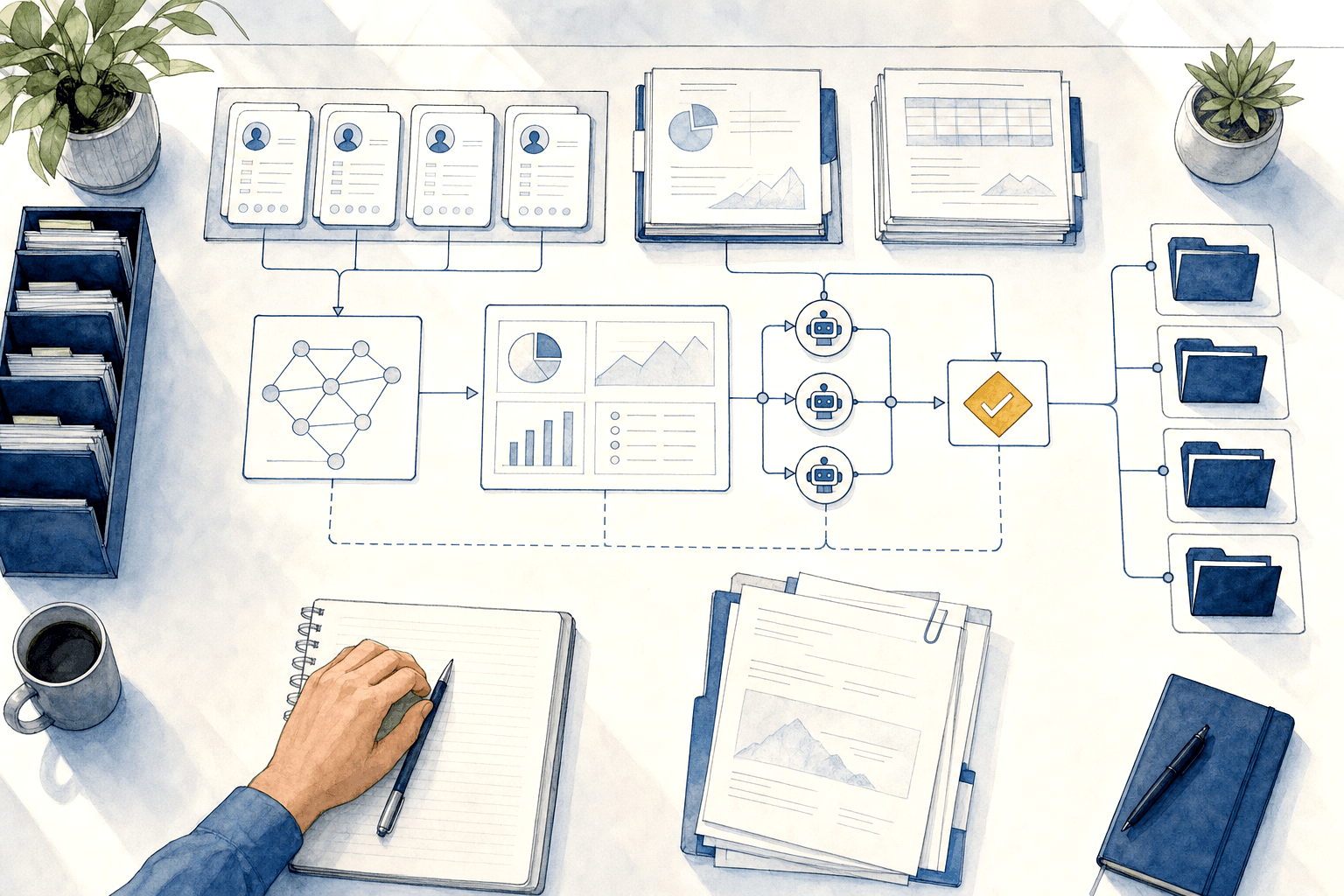
Deal materials route into one review lane
Teasers, CIMs, files, and owner notes can be organized so the team starts from the same context.
Due diligence automations
Document intake, criteria matching, diligence checklists, approval routing, and AI-supported review workflows that help an investment team decide whether a deal deserves deeper attention.
Best first when the team reviews many opportunities and wants faster screening against investment criteria before senior diligence time expands.
Fit check
The work supports the team's existing diligence process by organizing source files, criteria checks, first-pass notes, and next-step routing around the current workflow.
Intake
Teasers, CIMs, files, and owner notes can be organized so the team starts from the same context.
Criteria
Target filters, threshold questions, and required evidence can sit in the workflow before deeper diligence begins.
Routing
Approvals, questions, and follow-up tasks can route to the right person without rebuilding the deal context.
Diligence fit
Due diligence automation is strongest when deal files, review criteria, questions, approvals, and next steps are scattered across inboxes, folders, spreadsheets, and memory.
Search intent
Teasers, CIMs, owner notes, and diligence files are routed into a shared intake structure before review starts.
Search intent
Checklists and review fields keep the mandate, risk questions, and required evidence attached to the deal context.
Search intent
Document support is configured around known diligence questions, source references, review limits, and human approval.
Search intent
Questions, owner requests, internal approvals, and next steps route to accountable owners instead of disappearing after the first pass.
Deliverables
Automation layers that help the team review deal materials faster and with more consistent criteria.
Intake
A structured environment for deal files, owner notes, investment criteria, and review status.

Checklist
A diligence checklist tied to the investor's target profile, risk questions, and evidence requirements.
AI support
A configured support layer for summarizing materials, surfacing missing context, and preparing questions.

Approval
Approval gates, owner follow-up requests, and team tasks connected to the diligence status.
Example engagement
Diligence example
An investor receives deal files across email, folders, and spreadsheets. SilverShore creates an intake workspace, attaches criteria checks, adds AI-supported first-pass review with human gates, and routes follow-up questions so the team can see what is missing, who owns it, and whether the deal deserves deeper attention.
Questions this service answers
These are the practical questions this service is built to resolve before a mandate expands.
Question
It can include deal intake, document organization, criteria-matched checklists, AI-supported first-pass review, approval routing, and follow-up task management.
Question
No. It helps the team organize review work, surface missing context, and route next steps before specialist judgment or deeper diligence expands.
Question
Start where the review process repeats most often, such as file intake, criteria checks, question tracking, approval routing, or first-pass document review.
Question
It keeps files, criteria, notes, questions, owners, and approvals visible so the team is less dependent on memory or scattered follow-up.
Process
The work stays scoped, visible, and tied to an investor operating asset.
Process
Define the thesis, target profile, fit boundaries, and proof needed before outreach or build work starts.
Process
Create the research, materials, automation, or execution layer that supports the investor workflow.
Process
Put the asset into use with clear ownership, reporting, and next-step routing.
Process
Use reply quality, meeting quality, diligence questions, and portfolio feedback to tighten the system.
Related service paths
These links connect the investor service page to the commercial paths Google and buyers should understand together.

Financial review
Use financial analysis automation when diligence files should become cleaner KPI, model, valuation, and memo signal.
Sourcing context
Use sourcing when diligence criteria should inform target filters, owner context, and qualified opportunity handoff.
Mandate criteria
Use thesis mapping when diligence criteria need sharper sector, size, owner, or valuation logic before review volume increases.

Owner trust
Use owner trust materials when diligence or sourcing depends on owners understanding the firm before the first serious conversation.

Post-close support
Use portfolio growth support when diligence findings should turn into brand, market, pipeline, automation, reporting, or readiness work after investment.
Route
If another layer would create more immediate signal, use the investor service index to choose the sourcing, brand, intelligence, automation, or portfolio support lane that fits.
Investor handoff
Every investor lane is built to clarify the mandate, preserve owner trust, and make senior time easier to allocate.
For investorsRelated reading
These pages connect the investor lane to adjacent sourcing, diligence, valuation, and operating questions.
Checklist
Use the checklist to connect document requests, review criteria, findings, and deal decisions.
Insight
See how phase gates keep diligence findings tied to terms instead of disconnected notes.
Buyer course
Use the playbook to place diligence automation inside the full acquisition path.
Operating context
Every deliverable should make the next investor decision easier: thesis focus, deal sourcing, diligence path, financial analysis, portfolio support, or internal firm operations.
Investor layer
Market signal, deal sourcing, diligence context, financial analysis, portfolio support, and follow-up become stronger when each next decision carries the prior context.
Internal operations
Investors can also use SilverShore business services for their own firm operations: CRM visibility, AI operating systems, internal reporting, and workflow automation around the current stack.
Next step
We will map the intake, criteria, approval, and review steps that should move through automation first.