
Demand source
The best customer pockets should be easier to see
We organize the market by fit, access, timing, geography, and buyer behavior so the team can prioritize faster.
Market intelligence
For teams that want to know which customers, markets, competitors, and channels deserve attention first.
Best first when a clearer market map would make the next growth decision easier.

Fit check
Market intelligence shows where demand, competition, access, and timing look strongest.
Demand source
We organize the market by fit, access, timing, geography, and buyer behavior so the team can prioritize faster.
Expansion
We compare new geographies, niches, and service lines so leadership can see which move deserves attention first.
Competition
We compare competitor messaging, audiences, offers, reviews, channels, and whitespace so choices are based on real market signals.
Research fit
Market intelligence is strongest when leadership has several possible growth paths and needs evidence before committing time, budget, outreach, or positioning around one of them.
Search intent
The service compares segments, geographies, channels, and buyer behavior so the next move is chosen from market signal rather than internal preference.
Search intent
Target lists, fit signals, competitor presence, channel access, and likely buyer behavior are reviewed before the team expands into a new lane.
Search intent
Competitor pages, offers, reviews, audiences, and proof points are organized so the company can see where it can stand apart.
Search intent
The output becomes a ranked set of moves tied to outreach, positioning, expansion, or investor-readiness decisions.
Deliverables
Useful research tied to a real growth decision.

ICP
Target segments, company lists, filters, geography, and fit signals organized for action.

Competitors
Competitor positioning, market whitespace, and practical recommendations for where your company can stand out.

Channels
Ranked go-to-market paths based on sales cycle, buyer behavior, and likely response quality.
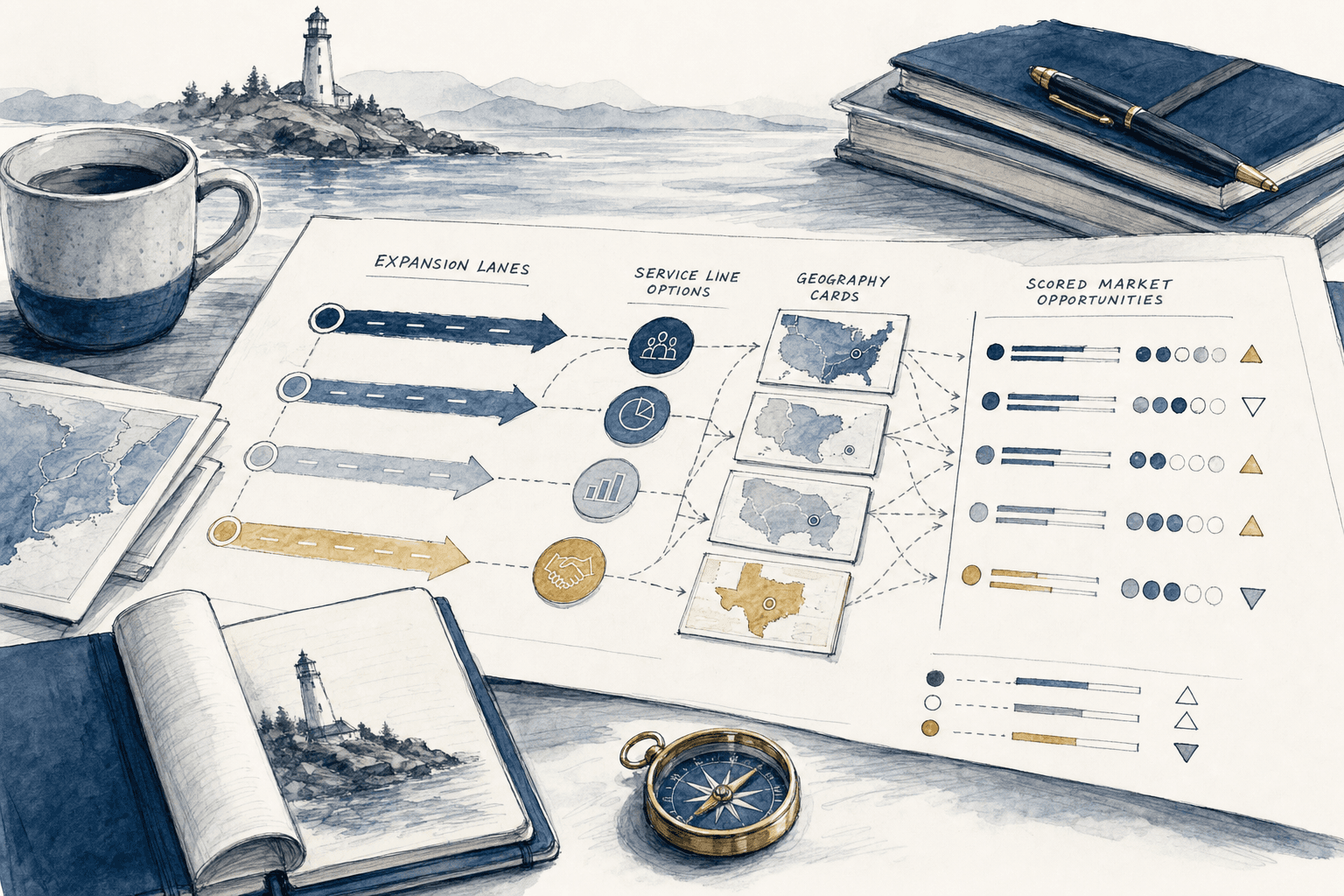
Expansion
A scored view of new markets, service lines, or acquisition themes with the tradeoffs made clear.
Example engagement
Market example
A founder sees several possible customer segments but does not know which one deserves the next push. SilverShore reviews buyer fit, competitor positioning, channel access, geography, and likely response quality, then turns the findings into a ranked market map the team can use for positioning and pipeline.
Questions this service answers
These are the practical questions this service is built to resolve before scope expands.
Question
It is practical research that compares customer segments, competitors, channels, geography, and buyer behavior so the next growth decision has better evidence.
Question
The output is built around a decision. It should tell the team what to prioritize, what to ignore, and what to test next.
Question
It can support market entry, positioning, lead list building, competitor review, channel strategy, buyer mapping, and acquisition or expansion themes.
Question
Bring the current growth question, suspected customer segments, competitors, geographies, channels, and examples of customers that fit or do not fit.
Process
The work stays scoped, visible, and tied to a practical business asset.
Process
We isolate the decision the research needs to support so the work stays useful.
Process
We collect and structure market, competitor, buyer, and channel evidence around the actual operating question.
Process
We translate the evidence into a ranked set of practical moves, with the tradeoffs made visible.
Process
We connect the map to outreach, positioning, or investment work so the research changes what happens next.
Related service paths
These links connect the service page to the other commercial paths Google and buyers should understand together.

Turn research into demand
Use pipeline work when the market map should become a focused lead list, message, and follow-up system.

Turn evidence into trust
Use brand work when research should sharpen the website, proof, positioning, or sales materials.

Repeat the research
Use automation when market tracking, competitor review, lead scoring, or reporting should become a reusable operating workflow.
Route
If another service would create more immediate momentum, use the service index to choose the starting point that belongs first.
Less useful start
The engagement begins with a broad category before the useful output is clear.
Better start
The first asset is chosen because it helps the business make the next decision.
Related reading
These pages connect the service to adjacent decisions the team may need to make first.
Insight
Use the research article to see how faster market analysis can still preserve judgment and source quality.
Reference
Review sector pages that organize market context for owner-led lower middle market businesses.
Next lane
A clearer market map can turn into a sharper lead list, message, and follow-up system.
Operating context
Every deliverable should make the next decision easier for the operator, prospect, buyer, investor, lender, advisor, leadership team, or portfolio team.

Core idea
The systems that create qualified demand also make a company easier to evaluate: clear positioning, market clarity, pipeline visibility, follow-up, organized files, and smoother handoffs.
Operating layer
The AI Operating System keeps the right context attached to campaigns, research, materials, dashboards, and follow-up so the team does not keep rebuilding the same answer.
Next step
A discovery call will confirm whether the market question is narrow enough to answer quickly and usefully.